.svg)



Is urology only for males? It’s a common question, but the answer is no. Urology is the surgical specialty concerned with the kidneys, ureters, bladder, and urethra, which are organs we all have. It also includes care for the male reproductive system, which is why the field is sometimes associated with men’s health only.
In practice, urologists see patients for a wide range of conditions. At Uro Westmount, that includes kidney stones, bladder tumors, urinary incontinence and other bladder control issues or problems with the urinary tract, as well as prostate enlargement and issues leading to erectile dysfunction. Some problems occur more often in men, others in women, but all fall within the same specialty.
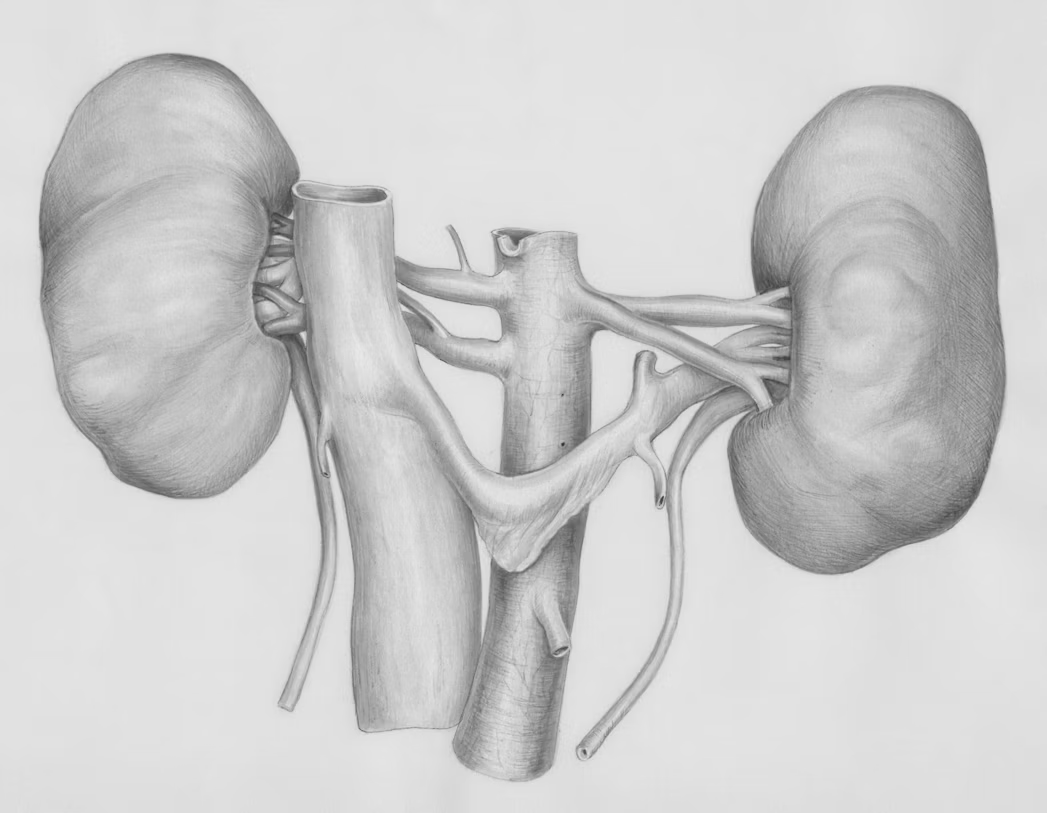
Urologists manage conditions involving the urinary system, which consists of the kidneys, ureters, bladder, and urethra. These organs are shared by men and women, making urology relevant to all.
Women make up a large part of urology practices since pregnancy itself alters the urinary tract and increases the likelihood of complications (Bosio et al., 2023). We often see women for recurring urinary tract infections, overactive bladder, kidney stones, and incontinence. Some arrive after trying medication or physiotherapy without relief, while others come at the first signs of discomfort. Urology addresses these conditions directly, with both diagnostic testing and surgical options available depending on the case.
Female patients sometimes experience issues that involve both pelvic and urinary organs, and as a result, urologists may work alongside gynecologists when urinary leakage or pelvic floor dysfunction complicates daily life. A subspecialty called urogynecology focuses specifically on these intersections. In practice, this collaboration helps address conditions that are often misattributed to gynecology alone, when in fact surgical urology has an essential role. For women seeking clarity, visiting a urologist can provide the missing perspective.
Although urology is among the medical specialties that serves all patients, the profession itself has historically been dominated by men. In Canada, women remain underrepresented in urology compared with other medical fields.
A recent Canadian study Bondok et al., 2024 found that although more women have been applying to surgical specialties in Canada, their presence remains disproportionately low in urology, an imbalance which cannot be explained by application numbers alone.
Many people are unsure when a urinary problem warrants a visit to a specialist. In general, it is worth seeing a urologist if symptoms are persistent and disruptive, or unexplained. Early evaluation is always wise, as it can help you get a clear diagnosis and treatment options to restore your quality of life.
Kidney stones usually announce themselves with sudden, severe pain in the back or flank. The pain can move toward the abdomen or groin, and it may come with nausea or blood in the urine. Some stones are small enough to pass naturally, but many are not. When they stay lodged in the urinary tract, intervention may beneeded.
Urinary incontinence, defined as loss of bladder control, is more common than many people realize, and it takes different forms. Some patients leak urine when they cough, sneeze, or exercise. Others feel an overwhelming urge to go that comes without warning. These problems can affect work, social life, and confidence.
A consultation with a urologist can clarify the cause and outline practical options for your issues and needs.
Most urinary tract infections clear up with treatment, but repeated episodes deserve closer attention. Frequent UTIs may be linked to incomplete bladder emptying, stones, or other structural issues. Left unresolved, they can disrupt daily life and increase the risk of further complications.
As men grow older, changes in the prostate are common. An enlarged prostate can make urination difficult, cause a weak flow, or lead to frequent nighttime visits to the bathroom. While these symptoms can be frustrating, they are manageable with proper care. Prostate cancer may also be a legitimate concern, one where early diagnosis and treatment is very helpful for a positive long-term outcome.
Ultimately, urology isn’t about men or women, it’s about providing comprehensive care for urological issues, which can affect anyone. Our urology clinic in Montreal is committed to providing evidence-based care tailored to your needs.
Our practice combines surgical expertise with thoughtful patient care. We treat the full spectrum of urological conditions in Montreal, supporting men and women alike. If you are seeking answers or want to schedule a consultation, contact us today.
.svg)



![An image of a surgeon hard at work]](https://cdn.prod.website-files.com/67483f1fcd01f8280706faf1/69c44b40096c867f9f8c075d_an-image-of-a-surgeon-hard-at-work.jpeg)






.svg)
.svg)
.svg)